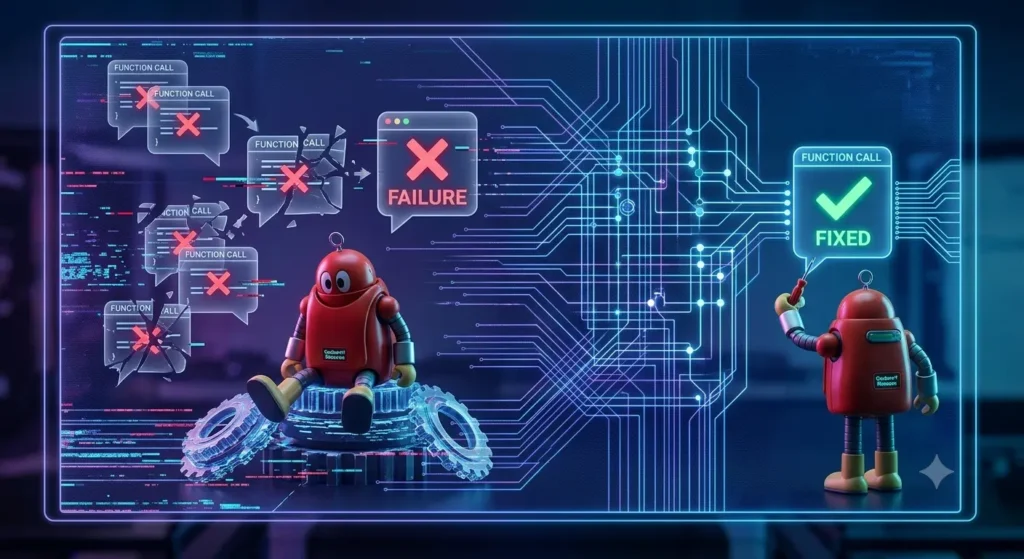
When AI Agents Break: Production Failures and Recovery Patterns
LangChain’s vector database queries started returning empty results at 3:47 AM on a Tuesday, cascading through Zapier’s automated customer support workflows and leaving 12,000 helpdesk
Welcome to Agentica: your guide to mastering AI Agent Workflows, the future of automation and the power of autonomous agents.
LangChain’s vector database queries started returning empty results at 3:47 AM on a Tuesday, cascading through Zapier’s automated customer support workflows and leaving 12,000 helpdesk

AI agents fail not because they lack intelligence, but because they’re drowning in their own memories. While developers obsess over model capabilities and training data,

Traditional RAG pipelines follow a straightforward pattern: embed, search, retrieve. While this works for simple questions, it breaks down under the weight of complexity. Enter the AI agent orchestrator: a sophisticated layer that transforms your RAG pipeline from a static retrieval system into an intelligent knowledge navigation platform—a research partner that plans, executes, and synthesizes insights in real-time.
LangChain’s vector database queries started returning empty results at 3:47 AM on a Tuesday, cascading through Zapier’s automated customer support workflows and leaving 12,000 helpdesk

AI agents fail not because they lack intelligence, but because they’re drowning in their own memories. While developers obsess over model capabilities and training data,

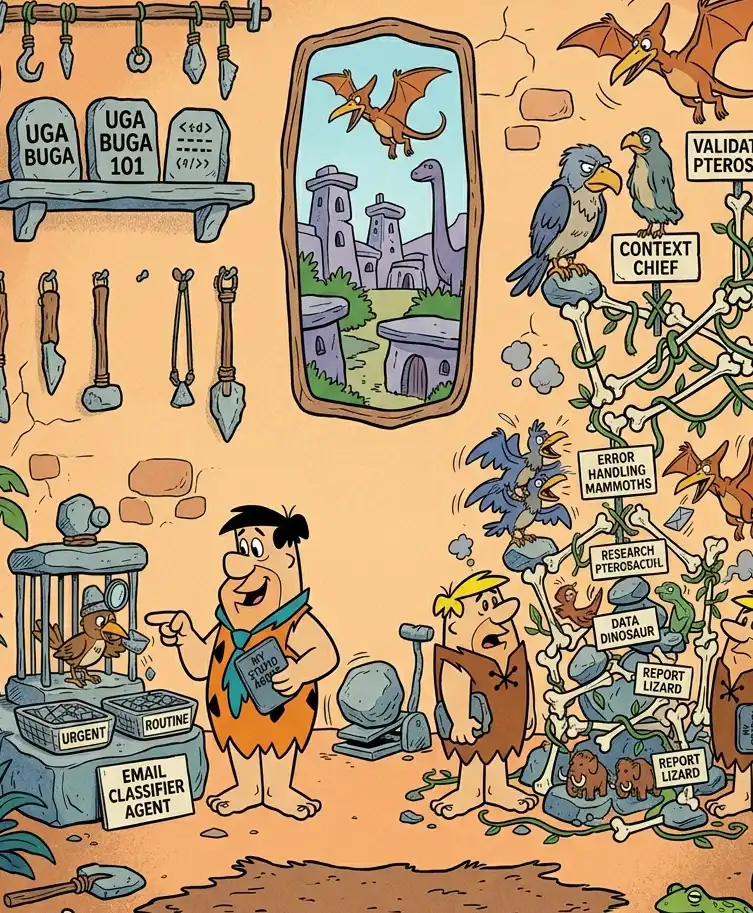
Your first AI agent should be deliberately stupid. Not because AI isn’t capable of complexity, but because simplicity is the foundation of reliability. The most successful AI implementations in production today aren’t the ones that try to replicate human intelligence—they’re the ones that excel at a single, well-defined task.

Your first AI agent should be deliberately stupid. Not because AI isn’t capable of complexity, but because simplicity is the foundation of reliability. The most successful AI implementations in production today aren’t the ones that try to replicate human intelligence—they’re the ones that excel at a single, well-defined task.

Traditional RAG pipelines follow a straightforward pattern: embed, search, retrieve. While this works for simple questions, it breaks down under the weight of complexity. Enter the AI agent orchestrator: a sophisticated layer that transforms your RAG pipeline from a static retrieval system into an intelligent knowledge navigation platform—a research partner that plans, executes, and synthesizes insights in real-time.

The software development world is being revolutionized by multi-agent debugging systems, where specialized AI agents collaborate to find and fix bugs in code—even their own! This innovative approach tackles the complexity of AI-generated code, creating truly self-healing software that learns and improves autonomously.